Hangar Talk: Dealing with Mechanical Failures in Flight
November 5, 2026
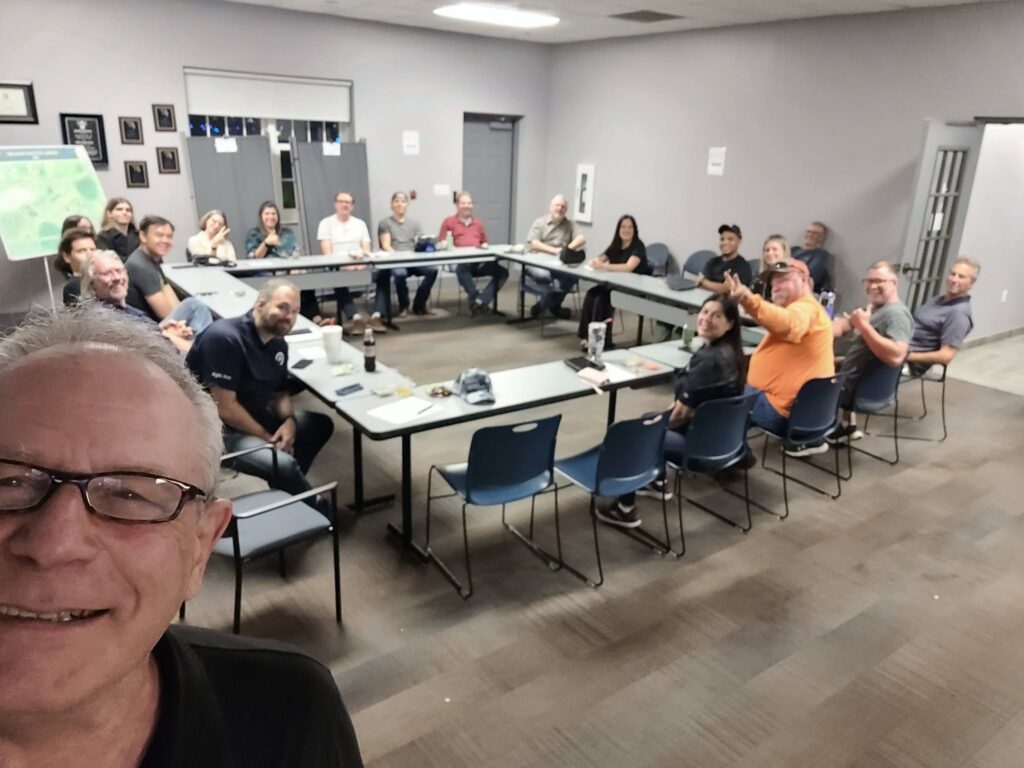
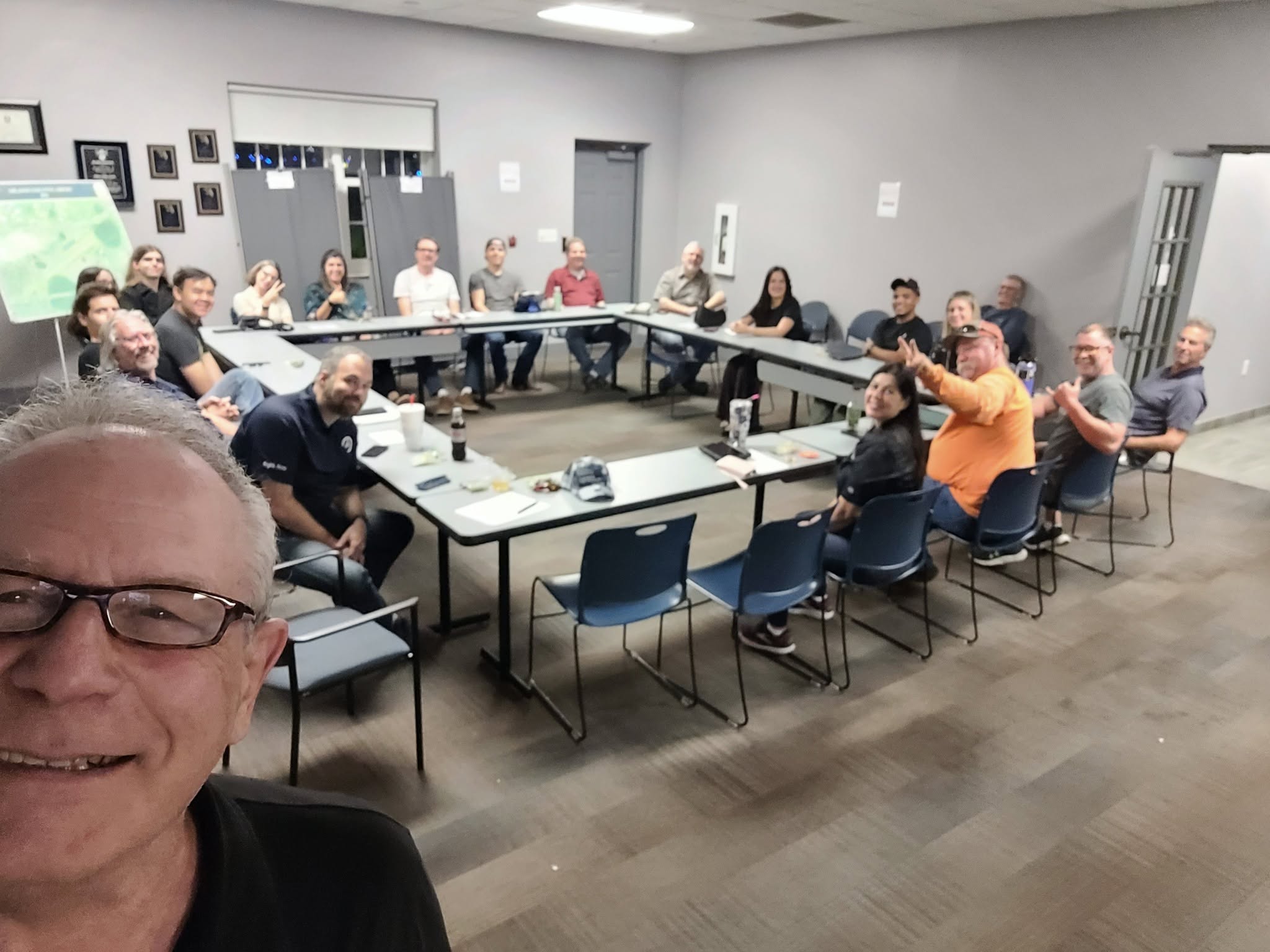
Twenty-two pilots gathered at Atlantic Aviation on November 4 for our Monthly Hangar Talk safety meeting. The topic: dealing with mechanical failures in flight.
As usual, John Tenney led us off with the pre-briefing, and we went around the room in the standard format: your name, where you are in your aviation journey, and your experience with the topic. The stories that followed were a mix of the serious, the humbling, and the occasionally hilarious.
Going Around The Room
Obie Young had to leave early but, as he walked out, reminded us: “Check list, check list, check list.”
Susan Davenport told us about discovering that her inexperienced CFIs at her old school didn’t stress a pre-takeoff briefing. She continued a low-power takeoff, telling the CFI, “We have low power, what should we do?” The CFI was experiencing a deer-in-headlights moment, and they continued the takeoff—later discovering they were still on only one magneto from the run-up check.
Richard Thomas had a voltage regulator go bad in his B58 Baron, and wires caught fire. He now does an extensive preflight and says, “I look for any excuse NOT to go flying when I am preflighting.”
Scott Douglas noted he never makes any mistakes himself, but one of his co-pilots got distracted on the pre-flight.
Rich Boney shared a story from a friend who flew an Eastern Lockheed L-1011. On takeoff from the long runway in Miami, the plane wasn’t gaining speed as expected. At rotation speed it was sticking to the ground. By the end of the runway they finally took off and climbed at a very low rate over the buildings of downtown Miami. Post-flight investigation revealed the plane had been severely overfueled and was over max gross weight by 160,000 lbs.
Sydney Schultz, a brand-new CFI, hasn’t experienced any equipment failures yet—other than the simulated ones in training.
Paul Crotty was flying a Stinson cross-country and learned that old planes, no matter how well maintained, still have things that don’t work as they should. He had to land somewhere. No damage.
Daniel Borquez Cedeno had an avionics failure in a plane once—and it was “ruled” that this counted for the topic. He shared how he made it safely back to the airport without the use of radios.
Rocio Tulian is still working on her ratings and has been fortunate so far—no mechanical failures.
Steve McAfee, back in the “old days,” was flying a single-engine plane and accidentally bumped the speaker switch off. He couldn’t understand why he wasn’t hearing anyone.
Christopher Schmidt was flying an Aztec for high-altitude photo surveying and noticed one engine wasn’t getting anything from the turbo. He diverted and found the last maintenance crew had not properly tightened the exhaust manifold.
Mike O’Leary gave us the most hair-raising story. As first officer for a United 737-900, they accepted an aircraft with a deferred maintenance item: the captain’s pitot tube, which intermittently failed to detect proper airspeed. The MX entry read “could not duplicate, ops check good.” While the captain was in the back for a bio break, Mike noticed the autothrottles were advancing in descent. His airspeed indicator was approaching the barber pole, but the captain’s was showing decreasing speed. He had to disconnect the autopilot/FMS and hand-fly until he could switch all the AP controls to his instruments.
Troy Wolbrink learned the hard way on a check ride that a compass with only one-third full of fluid is a “no-go.”
Sandrine Gressard shared several stories, but the most notable was a final demonstration flight by the selling owner in a PA-30 Twin Comanche. They experienced a gear extension failure and worked on the problem so long they were running out of fuel. They managed to land in a field next to a vineyard in France—the only field in the area that wasn’t covered by wires to hold grape vines. She credited her glider experience for teaching her to always observe where you might have to land. Her son Julian Belnager told his side of the Twin Comanche story and also reminded her of a distracted preflight story, which she shared. Her daughter Solana Gaud had no new stories to add.
Chanh Nguyen was flying a C172 over south Georgia and thought penetrating heavy smoke from brush fires wouldn’t be any problem. He learned that an engine doesn’t operate well breathing smoke, just like a person. He did a 180 and got out of it before anything catastrophic happened.
Michael Hale, a DA40 pilot (relatively newly built aircraft, all of them), said his most concerning failure was the air conditioning stopping working. This elicited a very condescending “awww” from the crowd. A little comic relief.
Richard Wilson was having electrical problems in a C172 at SFB. He told tower, and they said, “If you lose us, continue your approach and land.” He was able to clear the runway and diagnose the problem.
Ryan Binns shared several stories, but the most notable was during IFR training under the hood: the trim wheel in his Piper Archer stopped working, and the cable was visible on the exterior of the trim wheel.
John Tenney summed things up and told a story about an interrupted pre-flight where he failed to re-install the dipstick/oil cap on a C172.
Summary
The common thread running through every story: the preflight, the checklist, and knowing your aircraft are what stand between a story you tell at a safety meeting and one you don’t get to tell at all.